Artificial intelligence is reshaping how organizations operate, compete, and make
decisions. At the Darla Moore School of Business, faculty are actively advancing how
AI is understood and applied—through research, thought leadership, and engagement
with real-world business challenges.
AREAS OF FOCUS
Research Landscape
Moore School faculty are advancing AI research across a broad range of business disciplines.
Their work spans:
How AI changes hiring, pay, leadership, and employee management
AI adoption in banking, lending, and corporate disclosure
AI's role in multinational enterprise strategy, cross-cultural dynamics, and global
operations
Reinforcement learning, quality control, procurement, and manufacturing applications
Using ML and deep learning as analytical tools to study culture, trade, and sustainability
How AI affects teaching, learning outcomes, and classroom dynamics
Bias, fairness, greenwashing, and disparate impact in algorithmic decisions
Studying AI itself: its biases, behaviors, decision-making patterns, and organizational
impact
PEOPLE
Featured Faculty
The Moore School brings deep research expertise and real-world application to the
forefront of artificial intelligence and business.
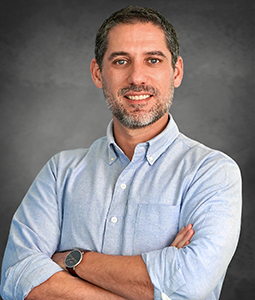
Rafael Becerril Arreola
Rafael Becerril Arreola studies whether algorithmic systems make reliable and responsible
decisions in consumer markets.
He combines machine learning, econometrics, experimental design, and computer engineering
to investigate pricing and recommendation systems.
His research examines the effectiveness and governance aspects of opaque algorithms
deployed in practice.
He teaches courses on data science and on the design and management of machine learning
and artificial intelligence systems, connecting technical foundations to business
decisions and responsible use.
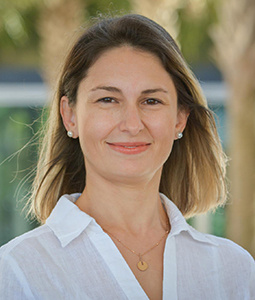
Wendi Du uses AI and language-analysis methods to study FinTech, innovation, and sustainability.
She applies AI-based methods to identify and analyze material corporate information,
including investments in emerging technologies, changes in input costs, and environmental
and social disclosures.
She examines whether investors can distinguish credible corporate disclosures about
emerging technologies from less credible claims.
In the classroom, she equips students with practical AI tools and skills that they
can apply in their own work.
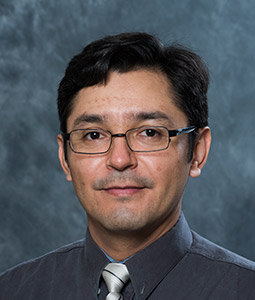
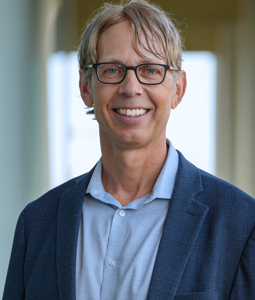
Cory Eisenhard studies how AI is changing the design of tasks, jobs, and organizations.
He develops AI job analysis methods to discover opportunities for AI augmentation
and automation.
He combines human resource management and computer science methods to identify cutting-edge
work designs and their implications for workers.
He teaches students how to use AI to accomplish challenging project work.
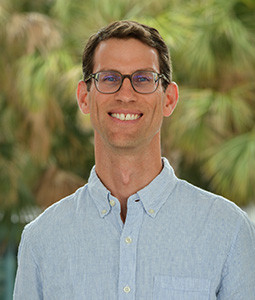
Blair Flicker
Blair Flicker studies how organizations can combine human judgment with algorithmic
decision-making.
He examines how firms can design systems in which people and algorithms make better
operational decisions together.
He is participating in a randomized control experiment measuring AI's effects on student
learning, engagement, and satisfaction.
He is exploring whether patterns in fuel-use data from Sub-Saharan Africa can motivate
people to switch from charcoal, which causes illness and pollution, to liquefied petroleum
gas, which is much safer and cleaner.
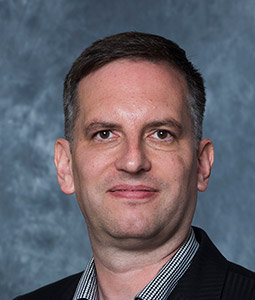
Daniel Kwasnitschka studies how people use AI to make operational decisions in organizations.
He examines when managers and employees rely on AI recommendations, when they override
or ignore them, and how those choices affect performance.
He also studies the dark side of algorithmic control: when the technology backfires,
creating new burdens or unintended consequences for employees and organizations.
He leads industry projects that apply AI to real-world operational challenges, such
as procurement and quality management, and measures its effect on real organizational
outcomes.
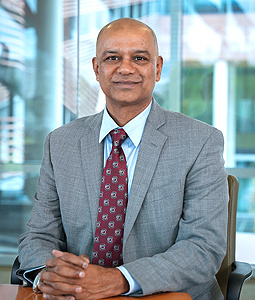
Wolfgang Messner’s work sits at the intersection of artificial intelligence, international
business, and society.
Originally trained in computer science, he began working with neural networks and
probabilistic models in the early 1990s and brings more than three decades of experience
across industry, consulting, and academia.
He applies supervised and unsupervised machine learning, deep learning, and large
language models to study culture, cross-cultural differences, and international marketing.
His research also examines AI systems themselves—their biases and limitations, and
their implications for organizational decision-making.
Ayse Ozturk brings AI into marketing research, business education, and educator development.
She designed and taught an MBA course on AI in marketing, giving students practical
experience with the technology.
Her research examines AI in education and how AI can help reveal misleading environmental
claims.
She shares approaches to AI teaching through invited talks, workshops, and resources
for educators at drayseozturk.org. She led more than a dozen workshops across several
universities.
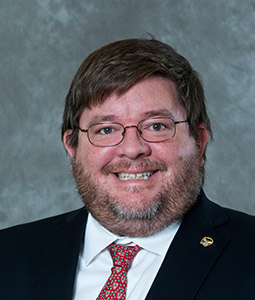
Patrick Wright examines what AI means for leadership and strategic human resource
management.
He studies the leadership competencies organizations need as AI changes how people
work and make decisions.
His work explores uses of AI in HR and their implications for talent strategy, executive
roles, and organizational performance.
Drawing on research with senior HR leaders, he has contributed to scholarship on how
generative AI is reshaping hiring, compensation, and performance management.
Chen Zhou uses large language models to investigate business questions through large
volumes of unstructured text.
She applies AI-based text analysis to uncover patterns in material that conventional
methods struggle to examine at scale.
Her broader research studies interorganizational relationships, private and public
services management, and the effects of these organizational decisions on performance.
She teaches marketing analytics, marketing research, and marketing for nonprofit organizations,
connecting quantitative methods and AI applications to practical business questions.
Darla Moore faculty are shaping how the world understands the impact of artificial
intelligence—from global strategy and financial risk to the future of work.
Drawing on a summit with HR scholars and Fortune 500 CHROs, this paper examines how
Generative AI is transforming HR practice and outlines a future research agenda across
recruiting, compensation, and performance management.
Published —Journal of Management(2025)
April Knill(DMSB) with Nambisan, Caligiuri, Kotabe, Zahra
How does AI reshape the way multinational enterprises operate, decide, and compete
across borders? This paper develops an integrated theoretical framework—centered on
agency, learning, and interaction—to examine AI's impact across five core areas of
international business.
Using causal methods, this study shows that AI adoption reduces non-performing loan
ratios. The benefits are strongest when AI complements human judgment, and more limited
in complex lending environments.
Under Review —Management Science(R&R)
CENTER FOR EXECUTIVE SUCCESSION
Research for Practitioners
The Center for Executive Succession at the Moore School produces applied research in partnership with senior executives
and Fortune 500 CHROs. Here are three recent reports examining how AI is reshaping
leadership, HR, and the workforce.
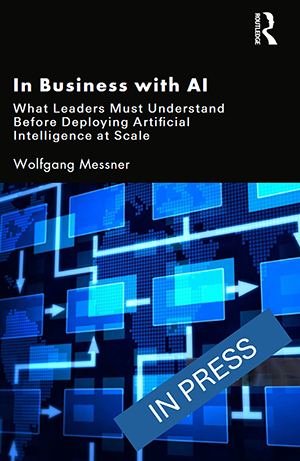
As organizations move from experimentation to embedding AI in core operations, leaders
face increasing pressure to make high-stakes decisions about technologies they may
not fully understand.
This book offers a clear, practical perspective on what leaders must know before deploying
AI at scale. It frames AI not as a mysterious breakthrough, but as a managerial technology—one
that requires deliberate choices around objectives, data, and governance.
Messner brings more than three decades of experience across industry, consulting,
and academia, including roles at Deutsche Bank, BMW Group, and Capgemini.
Challenge the conventional. Create the exceptional. No Limits.