
Skip to Content

College of Information and Communications

UNESCO Chair

Fellows

The UNESCO Chair works closely with researchers around the world to better understand the challenges surrounding the quality, reliability, and accuracy of information in today’s rapidly evolving media landscape. This global network brings together diverse perspectives and expertise, all aimed at strengthening how information is created, shared, and trusted.

Below, you’ll meet our fellows, scholars and practitioners who are actively contributing to this mission. Explore their work, ideas, and impact to see how each is helping address some of the most pressing information challenges of our time.


Marc Owen Jones

Marc Owen Jones

Marc Owen Jones, an associate professor of media analytics at Northwestern University in Qatar. His research and teaching examine disinformation, digital authoritarianism, and political repression, with a particular focus on how transnational influence operations, harassment campaigns, and digital control mechanisms emerge from — or target — the Middle East.

Jones is the author of Political Repression in Bahrain as well as Digital Authoritarianism in the Middle East: Deception, Disinformation, and Social Media, which was among Foreign Affairs’ 2023 Books of the Year.

He is known for pioneering investigations into coordinated disinformation and harassment campaigns that exposed networks of fake journalists, state-aligned bot operations targeting Western policymakers, and cross-platform influence efforts aimed at journalists, academics, and activists.
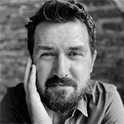

Dan Sultanescu

Dan Sultanescu

Dan Sultănescu, an associate professor at the Center for Civic Participation and Democracy (SNSPA) in Bucharest, Romania, and the founder of an interdisciplinary research center (CPD SNSPA). He also founded NewsVibe.ro, a startup for innovative measurement of online and social media impact.

Sultanescu is an expert in political science and public communication with extensive experience in political campaigns, elections, and communication research.

Brett Robertson

Brett Robertson 

Brett Robertson is an associate professor in the University of South Carolina's College of Information and Communications (CIC) and associate director of the university's Hazards Vulnerability and Resilience Institute (HVRI). His research examines how people and organizations find, interpret, and act on information before and during disasters, including how they judge which sources to trust and how to reach residents who often miss hazard warnings.

Robertson is a co-principal investigator on Where We Live, a multi-state project funded by the National Science Foundation (NSF), and leads its field research. He also works with the National Weather Service to produce a Daily Heat Risk Forecast for Columbia, South Carolina. His work examines the limits of new heat forecast tools, how perceptions of extreme heat differ by geographic context, and how public libraries can help deliver hazard warnings.

Robertson is a registered expert with the UNESCO Media and Information Literacy (MIL) Alliance, serves as secretary of the Global Strategic Communication Consortium, and organizes CIC's Information Literacy Speaker Series. He received the university's top award for undergraduate teaching in 2025. He holds a Ph.D. from The University of Texas at Austin.


Challenge the conventional. Create the exceptional. No Limits.

©